4 Signs Your Roof Needs a Drone Inspection This Year
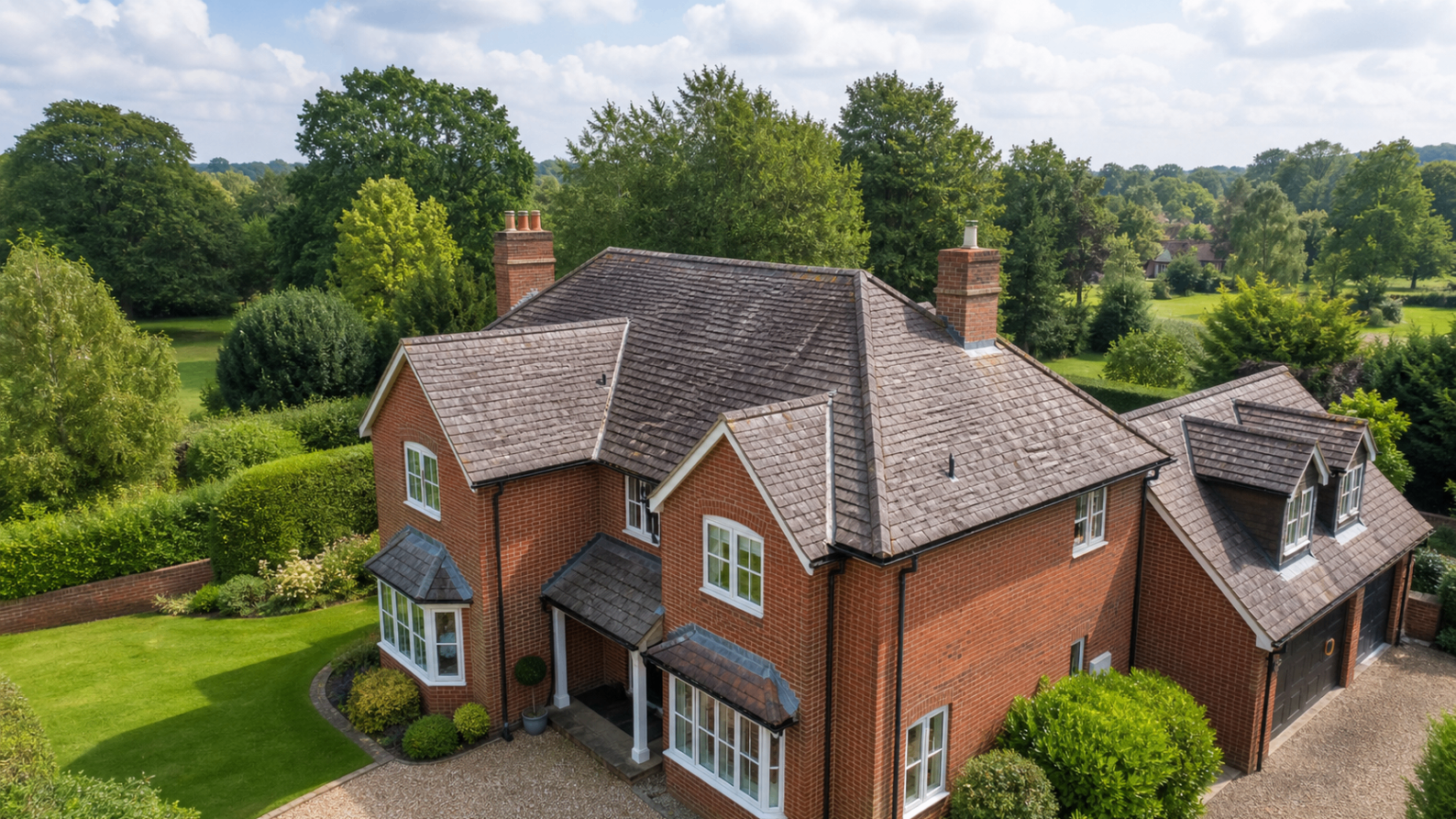
Most roof problems start small and get worse silently. By the time you notice a leak inside the house, the damage is often far more expensive than it needed to be. A drone roof inspection lets you catch issues early, without scaffolding or someone walking on the tiles.
If you notice any of these four signs, it is worth booking an inspection.
1. You can see missing or slipped tiles from the ground
Even one slipped tile can let water into the roof structure. A drone can fly directly above the affected area and capture a close-up so you know exactly what needs fixing and whether the damage has spread.
2. Your gutters are overflowing or leaking
Blocked or leaking gutters often point to problems higher up. A drone inspects the valley gutters, outlets and flashing around the chimney to find the real source of the water.
3. There is staining on ceilings or walls
Internal damp patches mean water is getting in somewhere. A drone inspection traces the likely entry point on the roof, whether it is a cracked tile, failed flashing or a blocked valley.
4. It has been more than five years since the roof was checked
Roofs age gradually. Even if nothing is visibly wrong, a periodic inspection catches small issues before they become costly repairs. This is especially useful before winter or after a spell of bad weather.
What the inspection gives you
- High-resolution images of every roof elevation
- Close-ups of tiles, flashing, chimneys and gutters
- Aerial video to see the roof in context
- Written report option with annotated findings
A standard drone roof inspection in Essex starts from £75 per hour. Read more about the service or get an instant quote.
Frequently asked questions
Can the inspection find a leak that has not shown inside yet?
Yes. We often spot cracked tiles, failed pointing and early damp patches before any internal damage appears.
Is the drone noisy?
Modern drones are quieter than most people expect. A domestic inspection is usually complete in under an hour and causes minimal disruption.
Do you need to come inside?
No. We fly from outside the property and only need access to the boundary.